

Go see a wonder of the world.
I’m writing from Lima, Peru. My girlfriend and I settled into an Airbnb here yesterday after enjoying Cusco and Machu Picchu, both totally surreal places. I’ll never forget when we first got a glimpse of the strange city as a bus took us up the mountain. The structures looked so out of place. It was almost as if something was wrong, seeing them on top of these massive, beautiful peaks. Walking so close to the clouds was an absolutely wild feeling. The rough roads and altitude, along with sleep deprivation from travel, had me feeling nauseous and exhausted on the way there, but the level of awe I felt once our tour began snapped me out of it, and also made me feel grateful to be a human. It’s inspiring knowing that your species was capable of building such things so long ago.
The stories of conquistadores in Peru are insane.
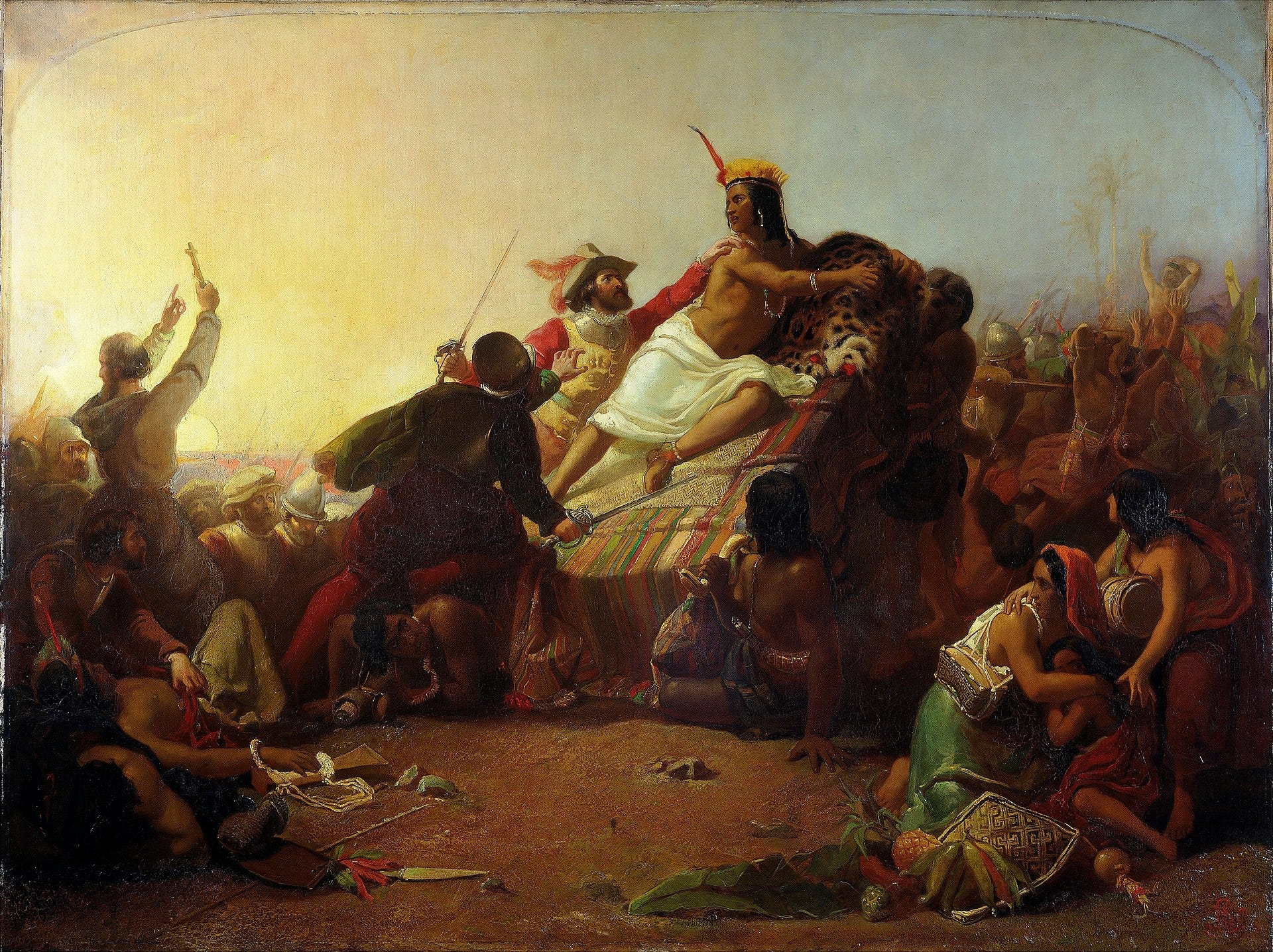
In the late 1520s, the Incan leader Huayna Capac died. The empire that stretched from Southern Colombia, through and Ecuador and Peru, and into much of Chile and parts of Argentina, was without a king. His two sons both wanted the throne, and a destructive civil war began. Atahualpa ended up winning against his brother, but soon after he did, he received reports of around 170 foreign men approaching a place called Cajamarca. This Spanish force was led by Francisco Pizarro, who invited the new Incan king to meet in the main plaza of the town. A friar approached Atahualpa, and demanded he submit to Christianity and Spanish power. When Atahualpa refused, and dismissed the book he’d been given, Spanish forces hidden in the buildings surrounding the plaza opened fire, rapidly killing thousands of gunless Incan soldiers. Pizarro himself captured Atahualpa. The desperate Incan then told the Spanish he would fill an entire room with gold in exchange for his freedom. Over the course of months, gold from across the empire was brought to the Spanish. Enriched, they then killed Atahualpa instead of freeing him, and marched on Cusco—alongside other native forces opposed to Incan rule—and took over the city. A couple years after, Pizarro established Lima as the new capital and center of Spanish administrative rule.
The Tower of Babel is dizzying.
It’s clear how proud the people in Cusco are of Quechua, the largest indigenous language family in the Americas.1 It’s unsurprising how important it is to them, because it’s a clear link to their Incan heritage. The language actually predates the Incas, who used it as a standard form of communication. A few days ago, some people taught Jade and I some phrases, but I’ve already forgotten them. It’s a radically different sounding language than any I’ve ever heard in person.
Around 8-10 million speakers.
Can’t wait to hear more about Peru💪
Adventure is out there!